

Do you wake up tired even after a full night’s sleep? Does your partner complain about loud, constant snoring? These are common signs of sleep apnea, a condition that disrupts your rest and can affect your health.
If you live in Canberra, help is available close to home. Sleep apnea Canberra treatment options include CPAP machines and custom oral appliances, also called Mandibular Advancement Splints (MAS). Each works differently, and the right choice depends on your needs, lifestyle, and comfort.
This guide will break down the pros and cons of CPAP and oral appliances. You’ll learn who each treatment is best for, what costs to expect, how to get started locally, and why choosing the right treatment matters for your health and energy.
Summary of the Article: Sleep Apnea Treatments
– Sleep apnea can cause fatigue, loud snoring, and restless nights, but help is available in our sleep clinic in Canberra.
– The main treatment options are CPAP machines and custom oral appliances (MAS), each suited for different needs and lifestyles.
– CPAP therapy keeps your airway open with steady airflow, ideal for moderate to severe cases.
– Oral appliances reposition the lower jaw to prevent airway collapse, making them ideal for mild to moderate sleep apnea or when CPAP isn’t tolerated.
– Both options improve sleep quality, energy, and overall health, with studies showing similar adherence when properly used.
– Costs vary depending on the device, fittings, and follow-ups, and rebates may be available through private health or DVA.
– Dental Sleep & TMJ Therapy Canberra offers personalised care, customised solutions, and ongoing support to help you sleep better every night.
What is Sleep Apnea?
Obstructive sleep apnea (OSA) is a common sleep disorder where your airway repeatedly collapses or becomes blocked during sleep. You stop breathing for brief moments, sometimes dozens of times each night, even though you might not remember it in the morning.
If you leave it untreated, sleep apnea can take a toll on your health. It increases the risk of high blood pressure, heart disease, stroke, and daytime fatigue that affects your mood, concentration, and overall quality of life.
Getting the right sleep apnea treatment can restore restful nights and protect your long‑term well-being.
Overview of Sleep Apnea Treatment Options in Canberra
Before choosing a treatment, most people in Canberra begin with a sleep study to confirm a diagnosis of sleep apnea and assess its severity. A sleep study records breathing patterns, oxygen levels, and sleep stages, so your clinician can tailor a treatment plan for you.
The two most common and effective treatment options available locally are:
-CPAP therapy
-Oral appliances
CPAP uses pressurised air to keep your airway open throughout the night. Oral appliances are comfortable, custom‑fit devices that reposition your jaw to prevent airway collapse.
Your choice often depends on a few key factors, such as:
– The severity of your sleep apnea
– Comfort with a mask versus a dental device
– Suitability for your lifestyle and nightly routine
CPAP Therapy
Continuous Positive Airway Pressure (CPAP) remains the gold standard treatment for moderate to severe obstructive sleep apnea. It has decades of clinical research behind it and is widely prescribed by sleep physicians across Australia.
How CPAP Works?
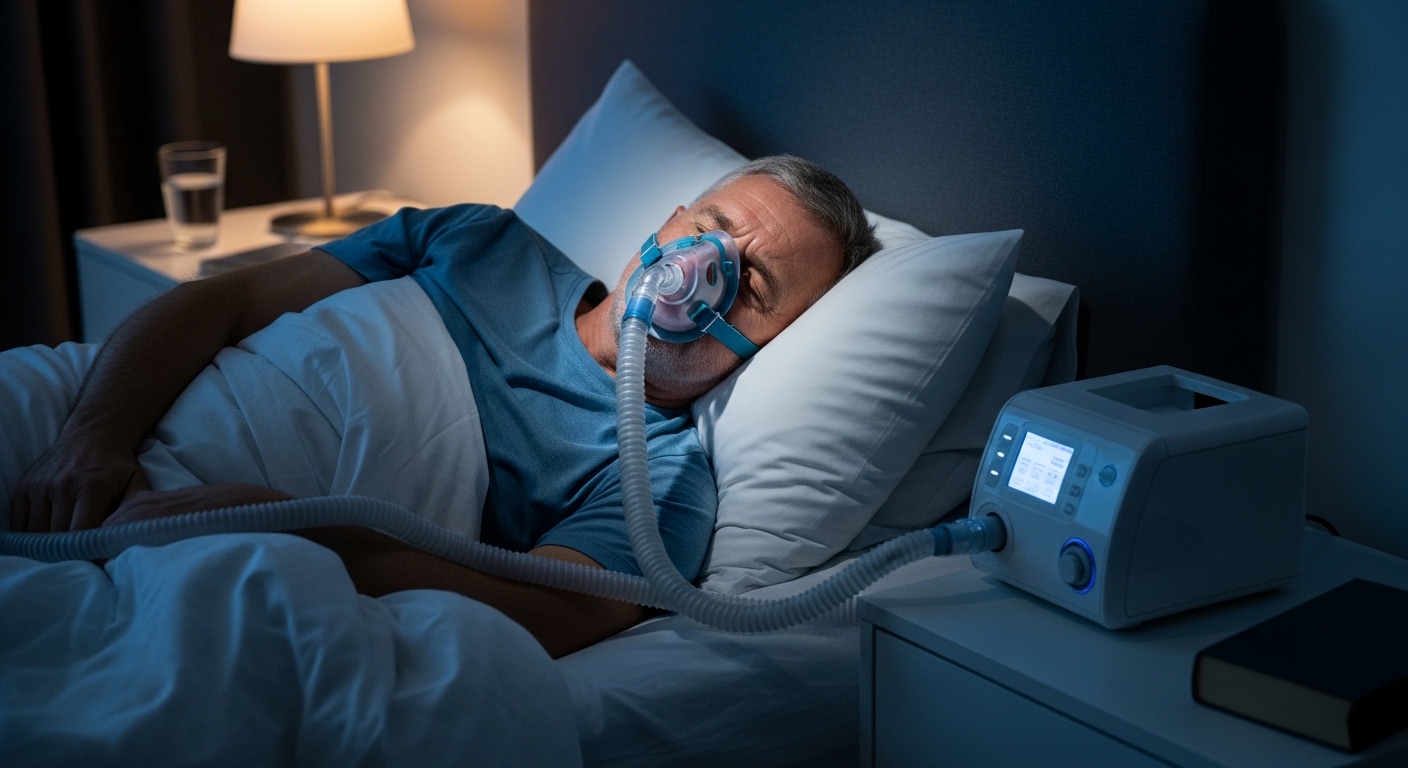
A CPAP machine delivers a steady stream of pressurised air through a mask worn over your nose or nose and mouth. This airflow acts like an internal splint, preventing your airway from collapsing while you sleep.
By keeping the throat open, CPAP reduces breathing pauses, stabilises oxygen levels, and improves sleep quality almost immediately when used correctly.
Pros of CPAP
– Highly effective for moderate to severe OSA
– Rapid reduction in snoring and apneas
– Improves oxygen levels throughout the night
– Strong evidence for cardiovascular risk reduction
– Adjustable pressure settings for personalised therapy
– Widely available through sleep clinics
Cons of CPAP
– Mask discomfort can affect nightly compliance
– Some experience dryness or nasal congestion
– Machine noise may disturb light sleepers
– Requires electricity and regular equipment maintenance
– Travel can be less convenient
– An adjustment period is needed for many patients
Oral Appliances (Mandibular Advancement Splints)
Mandibular Advancement Splints are custom-made dental devices designed to treat obstructive sleep apnea and chronic snoring. They are crafted by qualified dentists trained in dental sleep medicine and fitted precisely to your teeth for comfort and stability.
For mild to moderate sleep apnea and for patients who cannot tolerate CPAP, oral appliances can provide comparable symptom relief.
How Oral Appliances Work?
An oral appliance fits over your upper and lower teeth, similar to a sports mouthguard but far more precise. It moves your lower jaw forward during sleep, tightening the soft tissues at the back of your throat and helping prevent airway collapse. Improving airway stability, it reduces snoring, breathing interruptions, and oxygen drops throughout the night.
Pros of Oral Appliances
– Compact and easy to travel with
– More comfortable for many patients
– No masks, hoses, or machine noise
– Higher long-term patient adherence rates
– Effective for mild to moderate OSA
– Custom-fitted for optimal jaw support
Cons of Oral Appliances
– Less effective for severe sleep apnea
– May cause temporary jaw discomfort
– healthy teeth and gums
– Periodic dental adjustments are necessary
– Not suitable for certain bite issues
– Follow-up sleep testing is still recommended
CPAP vs Oral Appliances: Evidence-Based Comparison
Here’s a research-grounded comparison to help you understand the differences more clearly:
| Factor | CPAP Therapy | Oral Appliances (MAS) |
| Clinical Effectiveness | Considered the gold standard for moderate to severe OSA, with strong reductions in breathing interruptions when used as prescribed. | Clinically proven for mild to moderate OSA and endorsed by sleep medicine guidelines as a valid first-line or alternative therapy. |
| Reduction in Apnea Events (AHI) | Typically produces a greater reduction in the Apnea-Hypopnea Index during monitored sleep studies. | Produces meaningful AHI reductions in properly selected patients, especially those with positional or mild-to-moderate OSA. |
| Patient Compliance | Some patients struggle with long-term mask comfort and consistent nightly use. | Higher long-term adherence has been reported in many studies, driven by comfort and simplicity. |
| Overall Success Rates | Excellent outcomes when patients use the device consistently throughout the night. | Strong symptom improvement rates, particularly in patients unable to tolerate CPAP. |
| Best Suited For | Patients with moderate to severe OSA or significant oxygen desaturation. | Patients with mild to moderate OSA or CPAP intolerance. |
| Comfort and Daily Convenience | Requires a mask, tubing, humidifier maintenance, and access to power. | A compact, custom-fitted device worn inside the mouth without external equipment. |
| Cardiovascular Impact | Proven benefits in lowering blood pressure and reducing cardiovascular strain. | Studies show similar improvements in blood pressure when worn consistently. |
| Travel and Lifestyle Fit | Can be less convenient for frequent travel or camping situations. | Easy to pack, silent, and ideal for travel or shared bedrooms. |
Cost of Sleep Apnea Treatment in Canberra
If you have recently been diagnosed with sleep apnea in Canberra, one of the first practical concerns is understanding the likely cost of treatment. While exact fees vary by provider and individual needs, having a clear overview of typical expense categories can help you plan with confidence.
1. CPAP Machine and Accessories: For moderate to severe sleep apnea, a CPAP machine is often recommended. In Canberra, the cost can range from the lower thousands for basic models to higher amounts for advanced machines with automated pressure settings and integrated humidifiers.
2. Oral Appliance Fitting and Follow-Ups: If your condition is mild to moderate, a custom oral appliance fitted by a qualified dental professional may be suitable. The total costs typically reflect consultations, digital scans, fabrication, and adjustments.
3. Private Health, DVA, and Rebates: Depending on your level of private health insurance, you may be eligible for partial rebates on CPAP equipment. Eligible patients enrolled in DVA or other government programs may also access additional support.
Why a Personalised Cost Assessment Matters?
Every sleep apnea diagnosis and lifestyle circumstance is different. The most accurate way to understand your likely expenses is through a tailored assessment with your sleep clinic and equipment provider.
A personalised quote, combined with confirmation from your insurer, ensures you move forward with clarity and a treatment plan that supports both your health and your budget.
A Patient-First Approach to Sleep Apnea Care in Canberra
A patient-first approach to sleep apnea treatment, which Canberra residents can rely on, begins with careful listening, thorough assessment, and coordinated care rather than rushed decisions. At Dental Sleep & TMJ Therapy Canberra, the focus remains on clinical accuracy, collaboration with medical professionals, and measurable improvements in sleep quality.
With us, you’ll get:
– Comprehensive consultation to understand symptoms, medical history and lifestyle factors before recommending treatment.
– Evidence-based oral appliance therapy tailored to individual anatomy and severity of obstructive sleep apnea.
– Structured follow-up appointments to monitor comfort, effectiveness and long-term treatment adherence.
– Clear communication about expected outcomes, costs and ongoing care to support informed decision-making.
If you’re considering a structured and clinically guided solution for sleep apnea, a personalised consultation can help you explore the most suitable options. Consultations are also available for other services, including TMJ therapy, Bruxism, Dry Needling, and Facial Injectables.
FAQs (Frequently Asked Questions)
How do I get tested for sleep apnea in Canberra?
Start by visiting your GP, who can assess your symptoms and arrange the appropriate sleep study. Testing may be done at home or in a specialised sleep unit, with a physician reviewing the findings and outlining the next steps.
Are oral appliances as effective as CPAP?
In cases of mild to moderate obstructive sleep apnoea, a custom mouthguard-style device can provide meaningful relief, particularly for those who struggle with CPAP. For more severe conditions, CPAP therapy usually provides stronger, more consistent control of breathing interruptions.
Will private health or Medicare cover my sleep test or device?
Financial support depends on your level of cover, as some private health policies contribute toward equipment or dental devices. Medicare and DVA benefits may apply in certain situations, so confirming eligibility in advance is recommended.
How long will it take to notice improvement with an oral appliance?
Some people observe quieter sleep and reduced fatigue within the first few weeks of use. A proper review with your clinician helps determine whether the device is delivering the expected clinical benefit.
What if I can’t tolerate CPAP?
If CPAP proves difficult, discuss alternative strategies with your sleep specialist rather than discontinuing therapy. Adjustments, supportive programs, or another evidence-based option may improve comfort and long-term success.
Can a dentist in Canberra fit an oral appliance for sleep apnea?
Yes, trained dentists in Canberra can provide custom-fitted oral devices as part of a coordinated care plan. Collaboration with your GP or sleep physician ensures the treatment is safe, appropriate, and properly monitored.